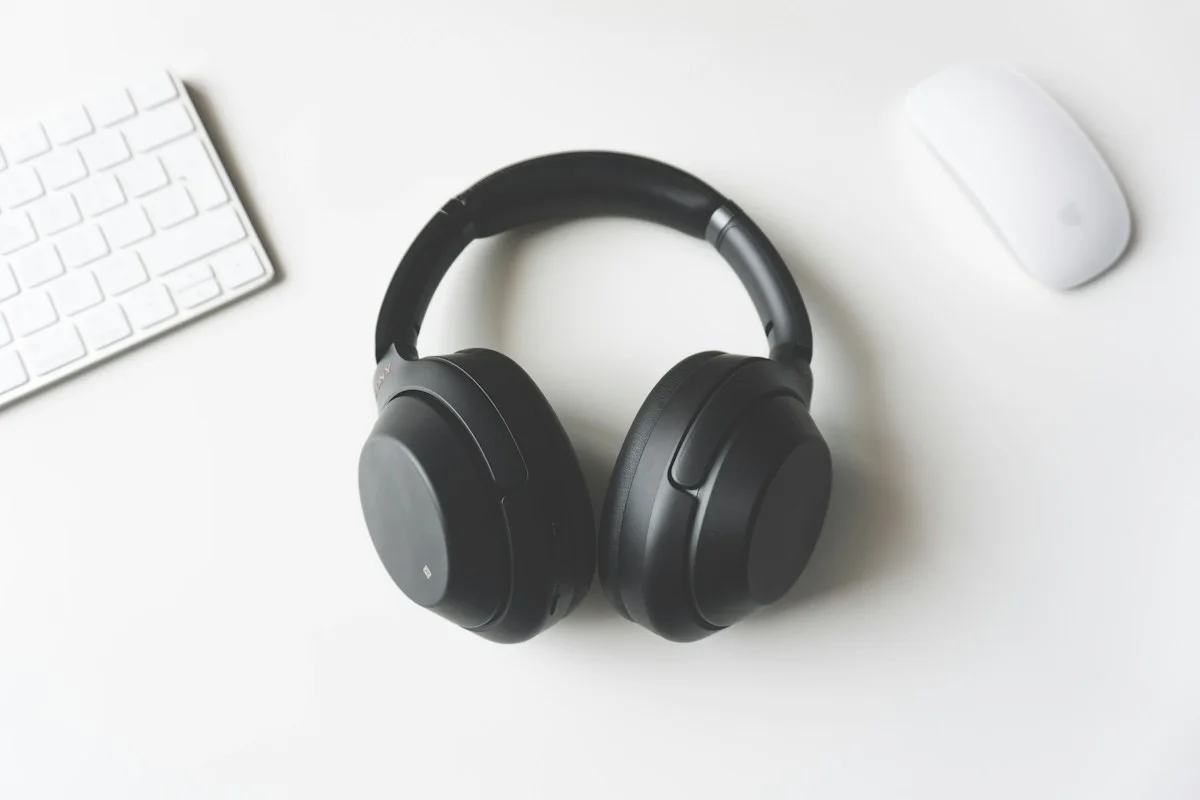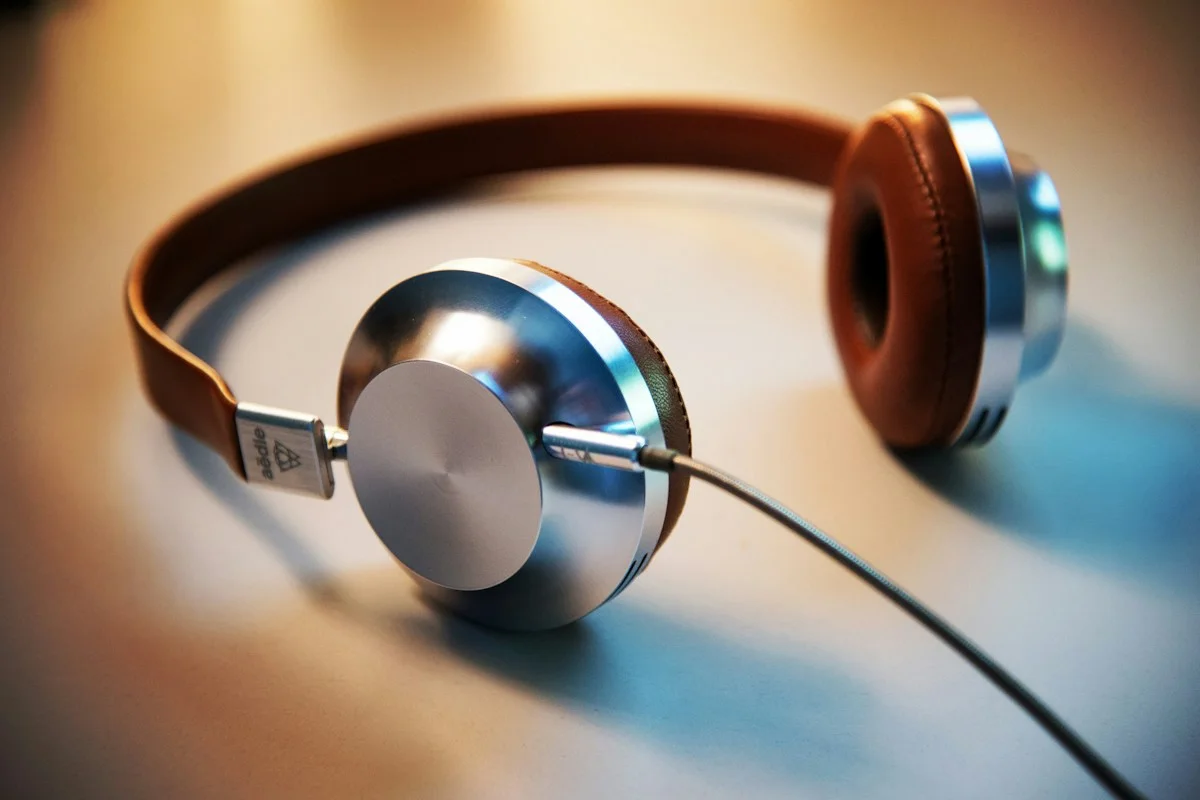

Evaluate clamping, earcup placement, and everyday fit before committing to full-size headphones.
Treat your glasses as part of the fitting
A headphone review cannot reproduce the shape of your head, the arms of your glasses, or the way you sit at work. Bring your usual frames to any in-person fitting and include the pair you actually wear for long sessions. Thin reading glasses and thicker everyday frames can feel different under cushions. Start with the activity that causes trouble now: a pressure point near your temples, an earcup edge touching your ear, or a headband that gradually becomes uncomfortable. That problem should guide the shortlist.
Give the fitting enough time
A comfortable first minute does not guarantee a comfortable afternoon. Where a retailer permits returns after a careful home evaluation, use a normal seated session rather than repeatedly adjusting the fit every few seconds. Notice whether discomfort develops at one point or across the headband. Take breaks and stop if the pressure becomes painful. Do not assume that a tight pair will necessarily loosen to your preference. Read the return conditions before ordering, particularly any hygiene restrictions or restocking rules that could make experimentation expensive.
Look at the earcup opening
Large exterior cups do not automatically mean a generous opening for your ears. Check published measurements when available and compare the actual space during fitting. Your ear should not be awkwardly folded simply because the design looks spacious in a photograph. Consider whether the cushions touch your glasses or press the frame into your head. A different cushion material may feel better to one person and warmer to another. Replacement cushions can extend useful life, but aftermarket changes may also alter fit and sound, so check manufacturer guidance.
Adjust before rejecting a useful design
Follow the fitting instructions and try modest changes to headband length and earcup position. A small adjustment can move pressure away from a frame hinge or distribute weight differently. Avoid bending the structure beyond the manufacturer’s guidance in an attempt to reduce clamping. If you normally work with a high-backed chair or lie back on a sofa, reproduce that posture during your evaluation. The chair can push large earcups forward. A pair that feels fine standing in a store may behave differently against your furniture at home.
Remember fit can affect the listening experience
The way cushions sit around glasses can change the seal, which can in turn affect what you hear. Do not judge the product only from a position you cannot maintain comfortably. Noise-control features should also be evaluated with your normal frames, rather than with the glasses removed for an idealized demonstration. Compare at a comfortable volume using familiar material. If a feature seems inconsistent, first check the maker’s fitting advice. Avoid using higher volume to compensate for a poor physical fit that the headphones are not solving.
Consider another format without forcing it
If several full-size designs remain uncomfortable, earbuds or another headset shape may be worth considering. Those formats bring their own fit questions and should receive the same patient evaluation. Do not buy an expensive alternative solely because someone promises it is universally comfortable. Your current headphones may also become more tolerable with shorter sessions and regular breaks, although worn cushions deserve inspection. Check whether official replacements are available before replacing an otherwise useful product. A modest maintenance purchase can sometimes address a change in comfort without starting over.
Choose return flexibility over a small discount
Sony’s headphone catalog and Apple’s full-size and earbud comparisons offer official places to inspect shapes and feature differences. They cannot determine comfort for your face and frames. Choose two candidates with plausible physical fit, compare the complete cost, and favor a seller whose return rules allow a careful decision. After delivery, evaluate your usual glasses, working posture, and session length. Keep the model that remains easy to wear while you concentrate on something else. Comfort is a repeated daily benefit, so it deserves priority over cosmetic preferences or an optional audio feature.
Include seasonal habits in the decision
Think about the glasses and clothing you use outside your typical indoor routine. Sunglasses may have thicker arms, a winter hat may change the headband position, and a warm room may make certain cushions uncomfortable. You do not need to simulate every possible season, but identify the combination you use most often. If summer outdoor use is occasional, do not let it outweigh daily desk comfort. If you commute in sunglasses every morning, include them in the fitting. The useful choice fits your recurring circumstances rather than an idealized bare-headed demonstration.
Explore the options
Compare the exact model, included accessories, return policy, and current price before buying. These links open official brand websites.
Sony headphones
Compare fit, controls, and noise-control options across the current range.
Tradeoff: Features vary by model; verify the exact listing before ordering.
Explore Sony headphones ↗Apple AirPods
Compare models if you use an iPhone and value device integration.
Tradeoff: Feature availability depends on the model, connected device, and software.
Explore Apple AirPods ↗Sources & further reading
Primary references consulted October 30, 2026. Product ranges and availability can change.
Cover photography illustrates an everyday setting and may show equipment other than the examples discussed. Read our methodology.